Interview in Aktual Magazine Croatia
Aktual Magazin (Croatia) 11 June 2014 Issue 158, pg 66-70.
Ekstremne Tocke U Zagreb
Interview by Tamara Boric. Photos by Andy Hartmark and Marshall Foster.
The following interview was for a Croatian magazine Aktual and was published as pre-publicity for and event in Zagreb called Freaky Friday that took place in on Friday the 13 of June, 2014.

Aktual magazine seems to be the Croatian equivalent of Time or Newsweek. It was very surprising that this interview and photos published in what would seem to be a conservative publication.
What follows is the questions that were asked and the answers that were given for the article.
Q: You will be performing in Zagreb, will this be your first time in Croatia? What can we expect?
A: This will be my first time visiting Croatia. I have traveled in Europe and Scandinavia before but have never been to Zagreb so I am really looking forward to it. My show is fun but shocking. It is based on the performances of Fakirs from Middle Eastern countries that were brought to Europe as entertainment. I have preformed my act in many countries and on TV shows all over the world and people are always amazed.
Q: It's actually the celebration of Friday the 13th. Do you believe in all of those bad things about that date? Bad luck, ghosts...
A: I have an interest in folklore but I have taken the Friday the 13th superstition and inverted it. For me it is good luck. There is only one Friday the 13th this year and that is the day get to come to Croatia and entertain people. What could be luckier than that?

Q: As I can see, your show is always a spectacle... Who organizes it?
What are the reactions of the audience? How different are they when compared [to different audianece] throughout the world?
A: My show was and still is self-created and self-produced. When I put it together it was a lost art. The acts were from another place and time. I created a presentation for the modern world and because it was type of entertainment that really did not exist anymore I had to come up with new ways to promote it and new places to present it. Performing at nightclubs that usually have rock bands was one of the ways of doing this.
Because of this, especially in America, the crowds tend to yell and make a lot of noise. People like the show all over the world, and one thing that is universal is that there are some people who are going to faint. At the very end of the show I do things that are pretty intense. I tell people if they don't think they can handle it they should watch the faces of the people who are watching the show. That can be entertaining as well.
Q: Are people in shock when they see your shows? Because, they know what they are going to see, but I guess there are some reactions to what you do...
A: People should know what they are going to see; I am called "The Torture King" for a reason. When people come to see the show I tell them that that I start with my least shocking feats and that the show gets more and more intense. I always give them to option of running out of the room right before I stick a skewer in through my muscles. It is usually the guys who are trying to be tough who end of fainting.
Q: What can we expect?
A: My show is about strange and intense demonstrations of control of the human body and mind. It is a fakir show the includes me swallowing a string and pulling it out of a part of my body that nothing should ever come out of and shoving sharpened bicycle-spoke like wires through my muscle tissue without blood or show of pain... and all in the name of entertainment. It appeals to the same kind of thrill and excitement you get while watching a scary movie or going on a roller-coaster.

Q: What are the reactions of the audience? How different are they when compared throughout the world? [Didn’t she already ask this?]
A: In places like Holland and Belgium the fakir show is traditional kind of entertainment. Last December I performed at a Winter Festival in Belgium and there were lots of families with children in attendance. They were warned about what I do beforehand and had no problem with it. The festival wants me to return this year.
Q: Who is the craziest [audience]? Can you tell us some of the anecdotes that you've experienced?
A: Audiences at rock music festivals in Scandinavian countries can be pretty wild. I have done a few of those and there is a lot of drinking going on and that adds to this. I remember doing a show at a club in Sweden where a couple of guys jumped on stage and wanted to get in on the show. They dropped their pants and began peeing into cups.... I won't tell you the rest. My show is very intense, but it is not about grossing people out. What I am doing is very dramatic and very traditional demonstrations of mind and body control. These guys jumped on stage were more like the TV show Jackass.
Q: You've been interested in sideshow art all of your life. What fascinates you so much?
A: At a very young age I was interested in stage magic, pulling rabbits out of hats and things like that. Then I read about sideshow style acts and fakirs performing in the Middle East and India. This was like real magic. There are no mirrors or hidden wires. It also appealed to me because it is so visceral and intense and something that everyone can relate to as most of the stunts involve the human anatomy; and everybody has a body [as obvious as that may be].
Q: Why did you decided to do what you are doing? This is not an ordinary, everyday job...
A: This was just a "weird hobby" for a long time. I would do some small shows at parties and now and then opening up for punk rock bands. In 1991 in Seattle I got together with a group and we put together a sideshow act that booked on the largest touring rock festival in the USA. It introduce a the lost art of sideshow to an new generation. I have been touring ever since then, both with group of other performers and with my own show.
Before I was touring and making my living as a performer I had very mundane jobs to pay the rent. Ever since I have been a performer I have been traveling to all kinds of interesting places and meeting interesting people all over the world. I love the nomadic lifestyle and the adventure of performing. It was not something I planned. It was something that I had a fascination with that came to the front of my life and now I can't imagine doing anything else.

Q: Who or what inspired you to start doing it? Have you seen somebody else do it? How did you learn everything you know? There aren't any schools for this...
A: Most of the people who inspired me were people I read about in books. They were either dead by the time I found about them or were from far away countries. One is a man who was named Mirin Dajo who performed in the 1940s. He would have a long, pointy fencing style sword run all the way through his body from the back to the front. It was the real thing. He did this in front of doctors many times.
I am mostly self taught. I learned some fire eating from a small circus troupe. I would try to get instruction from people who had experience, but most of what was seeking was a lost art. I did as much research as I could before I would try anything. I started with less intense acts. The more I performed and traveled the more I learned. I think now there are some places that teach some basic sideshow skills, but when I started there was nothing like that.
Q: As I could read, your father was a University professor. Did these things, this art that you are performing, started as a rebellious behavior, perhaps?
A: I don't see my interests as rebellious but rather as individualistic behavior. My interest in my act was never a way to be against something; it was just a subject that I found intriguing. I did have the advantage of living a University town that gave me access to a lot of information. I spent a lot more of my youth than I ought to have in University libraries. How's that for rebellious? I did find ways to rebel, but I never saw my act as having anything to do with that.
Q: Can you make good money? Is it worth going through all of those, as it looks like, painful things?
A: It the kind of thing where sometimes I make good money but it is not very consistent, like many other kinds of entertainment jobs. I tell people it is less painful than working at a fast food restaurant and less dangerous than driving a taxi.
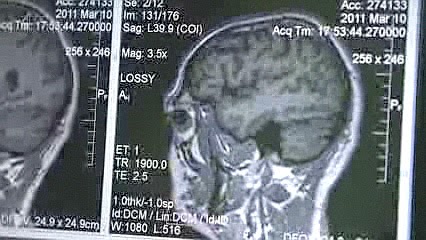
The fact is I feel pain differently than a normal person. I have trained myself to do this. I have been tested by doctors and have demonstrated this. I have documented this and it has been show on several TV shows recently.
Q: How do you feel on the stage?
A: I am kind of an extroverted introvert, so I have always had a strange relationship with the stage. I am not one of those performers who is "on" all the time. But it is a great feeling to be in front of a group of people and really freaking them out in an amazing and fun way.
Q: Can you tell me something about your childhood, growing up?
A: I had a difficult time growing up in a small-town. My ideas were very eclectic and I felt trapped and limited, despite the access to information. I have often wondered what would have happened if I had spent my teenage years in a bigger city.
Q: What fascinates you the most about your work?
A: The most fascinating part about what I do is that although I am showing some very dramatic and spectacular example and pain-control and body stunts, the same mental techniques can be used in everyday life to deal not just physical pain but stressful situations and psychological phobias.
Q: How long do you have to practice before you can do an act?
A: I do a lot of planning and metal practice before do an act on stage, and many times what I do more intense version of what I have already been doing. Once I wanted to lie down on a bed of nails and have a car drive over the top of me. I built the bed of nail and then began to see how much weight I could get on top of me during my stage act. I would get 4 of the biggest guys out of the audience to stand on top of me when I was on the nails. They would way over 1000 pounds (453+ Kilos) but that was still only about half the weight of the car; I could really not practice beyond that. It was for TV show it was going to be on the show whether I was successful or not. It was a success and since that time I have done it a few more times for TV . The last time I did it was for live TV in England. The car weighted so much that I passed out on live TV, but I came to and was OK afterwards.
Q: You wrote a book called Weird Las Vegas. Why? What is it about?
A: I was the first sideshow style performer in headline a show in a Las Vegas casino and lived there for 10 years. I have always had an interest in the strange and the unusual and used to publish a small magazine devoted to weird information. When I can I am a writer and have several published books and articles. Weird Las Vegas is about folklore, legends and unusual people and places in the Las Vegas region.
Q: What are your future plans, career wise?
A: I have been getting a lot of inquires from people asking them how to deal with pain and other discomforts. I have been putting together some information on using the mental techniques I use in my pain control acts for use in everyday life. I also have been doing some management of booking of other variety performers and I have some writing and research projects I would like to work on, including some television projects. Other than that, I plan to keep doing this until my body gives out... which may be a while. I have been doing this for almost 25 years and am still going strong.

Tim Cridland / Zamora TK
Skype Name: Zamora TK
www.facebook.com/ZamoraTKing
www.tsu.co/ZamoraKing
zamoraking@aol.com